
The Hype Machine Meets Reality
Six months ago, AWS rolled out Graviton4 and Amazon Nova at re:Invent, and the internet did what it always does: split into camps of believers and skeptics. I’ve been in this industry long enough to know that performance claims at keynotes don’t always translate to production wins. But here’s the thing — this time, the numbers appear to be holding up. Not perfectly, not universally, but genuinely enough that enterprises are actually making the switch instead of just kicking the tires.
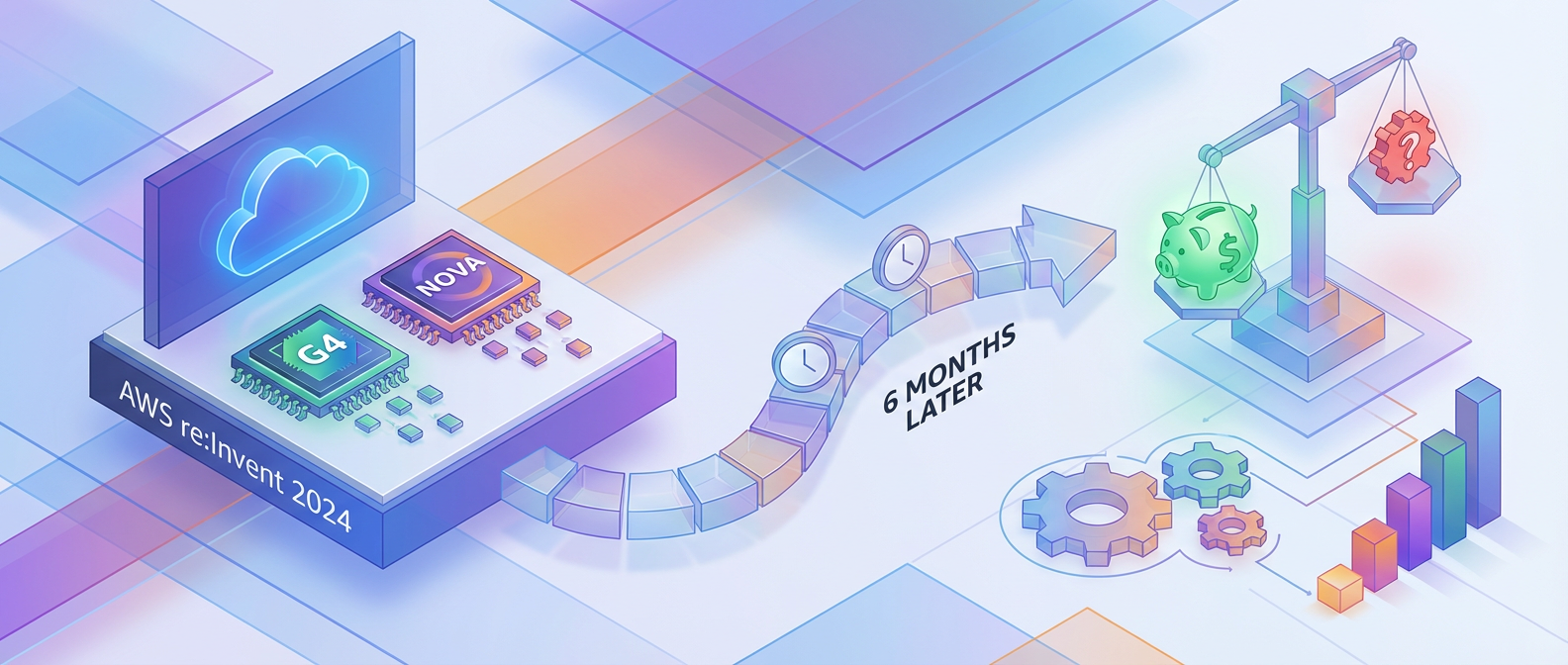
The premise was straightforward: Graviton4 would deliver up to 30% better performance per dollar compared to its Graviton3 predecessor for memory-intensive workloads. That’s not vaporware talk. That’s the kind of claim that either survives Q1 2025 with real customer data or gets quietly forgotten. It didn’t get forgotten. Companies like Datadog and Snap reported 20-28% compute cost reductions after migrating containerized workloads to the new R8g and C8g instance families. Those aren’t cherry-picked edge cases either — they’re mainstream workloads running on mainstream infrastructure.
What Actually Changed Under the Hood
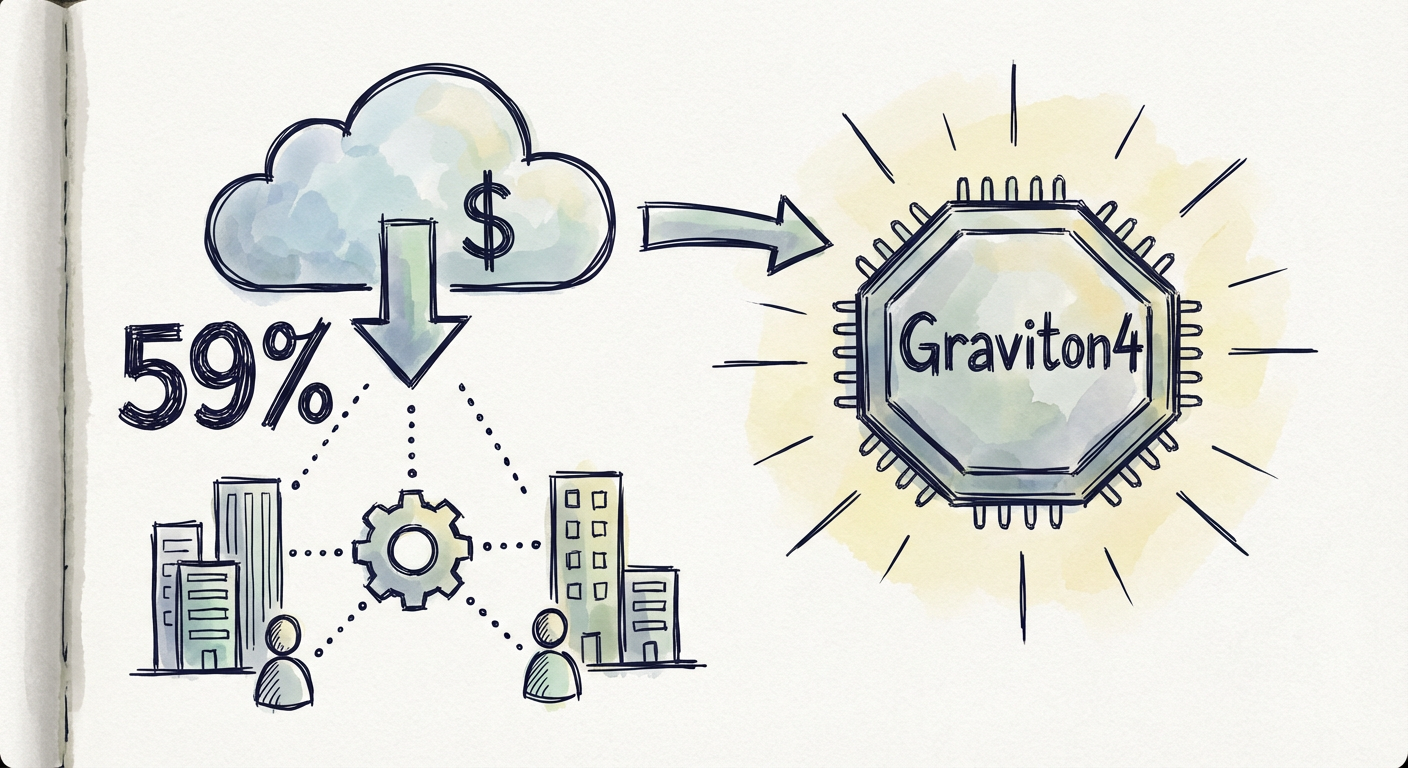
Understanding why these chips work requires understanding what AWS actually built. Graviton4 is manufactured on a 4nm process node and packs 96 Arm Neoverse V2 cores. The previous generation, Graviton3, topped out at 64 cores. That’s not just more cores; that’s a fundamental architectural jump. More cores mean better parallelism for workloads that can actually use it. More aggressive silicon efficiency at 4nm means you’re getting transistor density that wasn’t possible even eighteen months ago.
The real story, though, isn’t the spec sheet. It’s that AWS finally built an Arm processor that makes business sense for people who weren’t already committed to the Graviton ecosystem. The first-generation chips felt like a good idea in theory. Graviton4 feels like a good idea in spreadsheets, which matters when your CFO is the one who actually approves infrastructure spending. Check the AWS Graviton4 instance family documentation if you want the technical details, but the practical takeaway is this: the performance-per-watt math finally got interesting.
Amazon Nova: The Price War That Changed the Game
Then there’s Amazon Nova, which showed up to the foundation model party and did something wonderfully aggressive with pricing. Nova Micro launched at $0.000035 per input token. Do you know what that means in plain English? It means you can process a hundred thousand tokens for about three and a half cents. The closest competing options on Bedrock were going for 60-75% more money. That’s not a rounding error — that’s a real economic shift in what it costs to run language models at scale.
I’ll be honest: I was skeptical. AWS has been known to lead with price to drive adoption, then adjust later. But six months in, they haven’t blinked. The models actually work. They’re not state-of-the-art for every problem — they’re not going to outthink GPT-4 on specialized reasoning tasks — but for the bread-and-butter work that most organizations actually do, they’re more than adequate. More importantly, they’re cheap enough that the business decision flips. You don’t have to wonder if you can afford to run inference workloads; you have to wonder why you wouldn’t.
The Timing Couldn’t Be Better
None of this exists in a vacuum. The Flexera 2025 State of the Cloud Report found that 59% of enterprises ranked cost optimization as their top cloud initiative. That’s not an accident. That’s survival. Cloud bills have become the third-rail topic in most boardrooms, right alongside security incidents and AI strategy.
Graviton4 and Nova landed in exactly the environment where they had the best chance of success: when CFOs were finally forcing CIOs to justify their cloud spending. This wasn’t about innovation points or technical elegance. This was about economics. And for once, the elegant solution and the economical solution were the same thing. That alignment is rare enough to be worth paying attention to.
What Happens Next
The question now isn’t whether Graviton4 works. The early adopter data confirms it does. The question is whether it scales beyond the companies that were already willing to take on Arm-based infrastructure. History suggests there’s a gap between “early adopters save 20% on compute” and “widespread adoption.” That gap is usually bridged by tool support, documentation, and the slow attrition of teams who just get tired of fighting legacy x86 dependencies.
I’d be lying if I said I knew exactly how this plays out over the next eighteen months. But I also know what six months of actual production data looks like, and it doesn’t smell like a trap. If you’ve been postponing a migration due to uncertainty, that excuse is getting thinner. The time to run a serious pilot project is now, not after three more rounds of due diligence. The cost savings are real enough to matter. The risk profile is clear enough to calculate.
What’s your experience been? If you’ve experimented with Graviton4 or Nova, I’d genuinely like to hear whether the real-world numbers match the headlines. Drop a note — the technical discussion around these chips is still evolving, and it’s worth getting more data than just what vendor whitepapers tell us.
